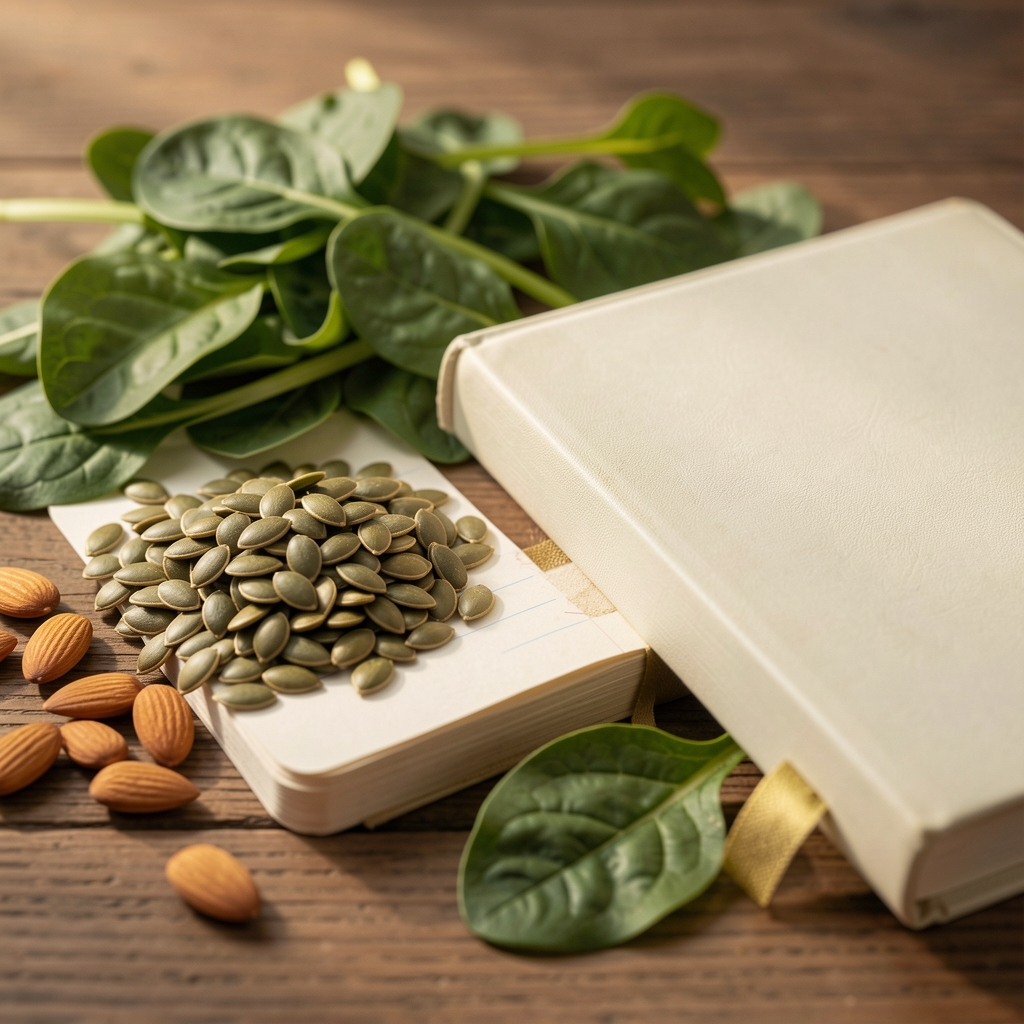
Magnesium appears in the daily conversation of active men because it sits at the meeting point of food, movement, rest, and routine. In Jakarta, the subject is often introduced through a label, yet the more useful starting point is a familiar plate: greens, beans, seeds, grains, and nuts that already sit on many tables across the city.
The food context comes first.
A supplement can be described accurately only when its food surroundings remain visible. Pumpkin seeds, peanuts, tempeh, spinach, oats, and brown rice each contribute to dietary variety. Their portions, preparation, and place in a meal matter more than any single dramatic claim printed on packaging.
The editorial record for this piece began with a simple list of meals across several days. This made room for the ordinary details that shape a routine: breakfast eaten quickly before a commute, lunch taken near the office, a late training session, or dinner shared at home with family.
Why evening language appears.
Many labels position magnesium near the evening, but timing should be read as a routine suggestion rather than a universal rule that applies equally to every reader. Some readers find an evening habit easier to remember because it sits beside an established meal or a preparation ritual already built into their day. Others prefer a morning note that fits more naturally around a commute.
The useful question is not which hour sounds most notable on a label. It is which point in the day can be recorded consistently, alongside a varied diet and a reasonable understanding of one's own schedule, including the days that do not go as planned.
| Food source | Typical serving | Notes for an active week |
|---|---|---|
| Pumpkin seeds | 2 tablespoons | Easy to add to breakfast or a snack between meetings. |
| Spinach or kale | 1 cup cooked | Common in home-style Indonesian dinners. |
| Almonds | A small handful | Portable for a commute or a gym bag. |
| Brown rice | 1 cup cooked | A practical swap for white rice at some meals. |